
 Help offset server costs by donating. This is totally optional. Any overages will go to library fines or new books.
About H Rider Haggard
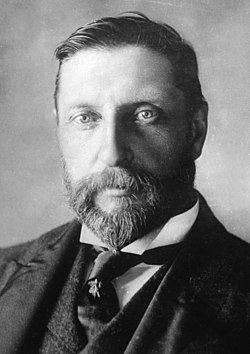
Sir Henry Rider Haggard KBE (22 June 1856 – 14 May 1925) was an English writer of adventure fiction romances set in exotic locations, predominantly Africa, and a pioneer of the lost world literary genre.[1] He was also involved in land reform throughout the British Empire.[2] His stories, situated at the lighter end of Victorian literature and including the eighteen Allan Quatermain stories beginning with King Solomon's Mines, continue to be popular and influential.
Henry Rider Haggard, generally known as H. Rider Haggard or Rider Haggard, was born at Bradenham, Norfolk, the eighth of ten children, to William Meybohm Rider Haggard, a barrister, and Ella Doveton, an author and poet. His father was born in Saint Petersburg, Russia, in 1817 to British parents.
A member of the Haggard family, he was the great-nephew of the ecclesiastical lawyer John Haggard and an uncle of the naval officer Admiral Sir Vernon Haggard and the diplomat Sir Godfrey Haggard
Haggard was involved in reforming agriculture and was a member of many commissions on land use and related affairs, work that involved several trips to the Colonies and Dominions. It eventually led to the passage of the Development and Road Improvement Funds Act 1909.
He stood unsuccessfully for Parliament as a Conservative candidate for the Eastern division of Norfolk in the 1895 summer election, losing by 197 votes. He was appointed a Knight Bachelor in 1912 and a Knight Commander of the Order of the British Empire (KBE) in the 1919 New Year Honours.
Sir Rider Haggard died on 14 May 1925 in Marylebone, London, aged 68. His ashes were buried at St Mary's Church, Ditchingham. His papers are held at the Norfolk Record Office. His relatives include the writer Stephen Haggard (great-nephew), the director Piers Haggard (great-great-nephew), and the actress Daisy Haggard (great-great-great-niece).
He wrote well over 50 novels plus sundry short story collections and vast quantities of material for newspapers and periodicals.
(From Wiki)